Valuable Rocks and Minerals That Might Be In Your Backyard
If you’re lucky enough to live in the right area, there may be some precious minerals and stones right in your own backyard! It’s just a matter of knowing what’s there, since many people walk by stones with significant value none the wiser. Some of these are more common than others, but they’re all the kind of stone you may find on private property.
So let’s take a look at our list of valuable rocks and minerals you might be able to find at home!
A Word About Our “Backyard Treasures”
We’re not here to mislead you into thinking that you can grab a garden trowel and find gem-grade rubies in your backyard or that an obsidian pebble is worth a small fortune.
For that reason, assume a bit wider area than your backyard but I will include states and regions where these stones are common. If you live in one of these hotspots you may very well have a bit in the actual, physical yard.
I will also get into the economic viability of the stones and what you might need to do in order to make a profit from them. With a little bit of labor and marketing finesse you can make money with every stone labeled below, it’s just a matter of what you think your time is worth.
Getting The Right Tools
As unfortunate as it is, most of the time we’ll have to put in some serious labor to make stones more valuable and appealing to buyers. Rough material can be sold, but the prices aren’t great and unknown varieties of many stones may not sell at all until you’ve cut them open.
The following tools may be useful, depending on the stone you’re looking for. The tools you may need to make a stone more valuable are the following:
- Chisels– For removing crystals, cold chisels are cheaper but may not last as long as masonry chisels. With a grinder you can resharpen or shape cold chisels in just a couple of minutes so they’re fine for hobbyist use.
- Rock Pick– These little hammer/picks are valuable in the field for separating crystals or breaking apart layers of stone. They can also break stones in a pinch, but a dedicated 3-4lb sledge hammer is a better tool for serious mining. I use mine to strike chisels while in the field as well.
- Wet Tile Saw– Not quite as good as a true slab or trim saw, but they’ll do the trick if you’re careful. You want to replace the tile blade with a good diamond blade before cutting stones as well. Something like this is expensive but will last for years if you’re careful.
- Dremel– A rotary tool with a polishing wheel is a good idea, and a Dremel is the right size for the majority of hobbyist finds. If you have larger stones to polish it’s a good idea to refit a bench grinder with a couple of felt wheels, just be sure not to unbalance the machine.
These tools, and a bit of experience with them, will make it much easier for you to profit from your finds if that’s your intention. Just make sure to wear appropriate PPE when cutting or polishing stones, an N95 mask and safety glasses will cover most uses.
1. Jade
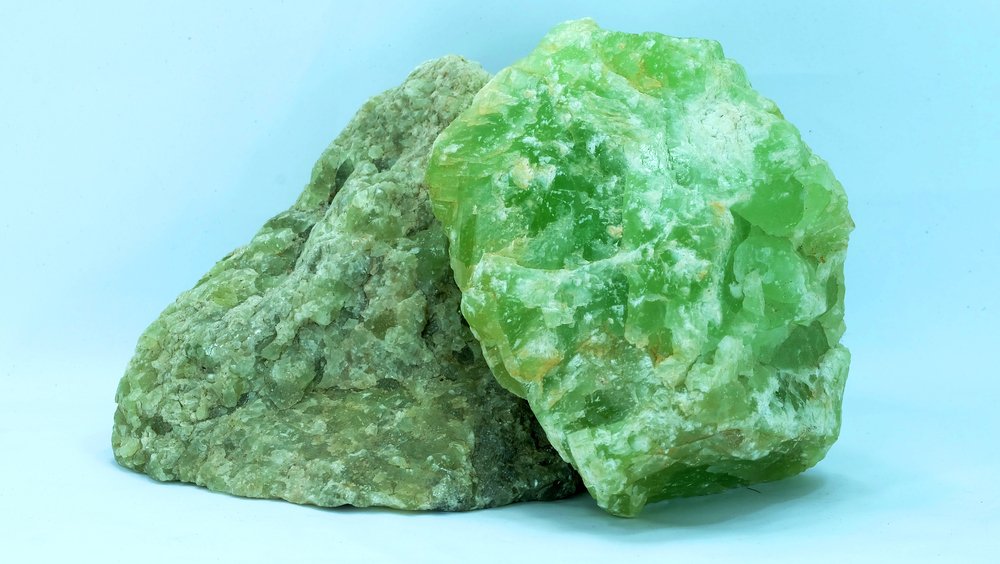
Jade is a valuable stone and found in quite a few places across the US. It’s one of the better “backyard” finds if you happen upon some true jadeite, or even high-grade nephrite, as it can be worth quite a bit. There’s a tendency for these stones to be overlooked, particularly in places where greenish stones without much value (ie: low-grade serpentine) are found.
It’s also a valuable backyard find I’ve seen in person. I live near an area where high-grade nephrite can be pulled from the ocean. Working a landscaping job as a teenager I found a large, green boulder covered in weeds in the client’s backyard and scraped off some dirt to take a look. I had a feeling it was jade and let the client know.
It was later confirmed to be nephrite jade and became part of the client’s retirement plan. Boulders that size retail for six figures in my area and become more expensive further away due to shipping costs.
Not bad for a “pretty rock” his father had dragged home from the sea. Jade is easily recognized by its smooth surface, incredibly dense grain, and it’s hardness. Color is also important, but it’s distinct to the area and individual formations.
While the chances of unearthing a boulder in the backyard are low, it can be found in some places across the USA. Coastal California is one place it shows up often, with bigger concentrations in Big Sur and some of the beaches of Norcal. Keep your eyes open and examine green rocks, if it’s dense, a ring when struck, and can’t be scratched by a knife then it’s worth slipping in your pocket!
2. Quartz
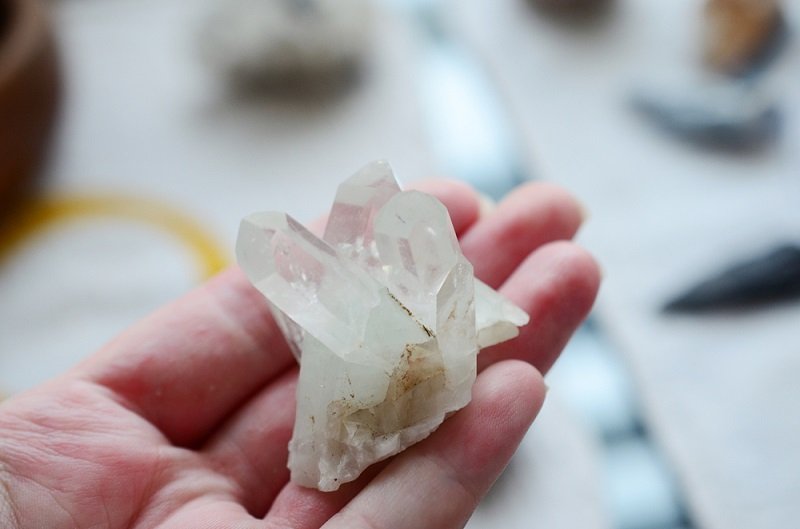
Quartz is a common stone, far more common than most people realize. That said, it also has real value, even the smallest points are usually worth a few bucks each and it’s rare for quartz points to occur on their own. If you happen to live in one of the areas where it’s common you can make a score with a bit of backyard digging.
Most of the time you’ll find quartz in clay-type soils or in vugs in the bedrock. It largely depends on the geological formations under the earth in your area. Unique samples can bring in good cash, especially with the New Age attributions of different growth patterns.
Before you strike the earth make sure that quartz occurs in your area. Many states have it, including Arkansas, New York, and California. While not all places will produce great samples, at least as far as the market is concerned, it’s worth keeping an eye out.
Quartz itself is a macrocrystalline form of silica. The crystals can be recognized by their six sides, elongated shape, and pyramidal termination. They can be found as geodes as well as clusters and points depending on the formations in the area. You should take a look into what’s around before you go tearing up the backyard.
3. Agate
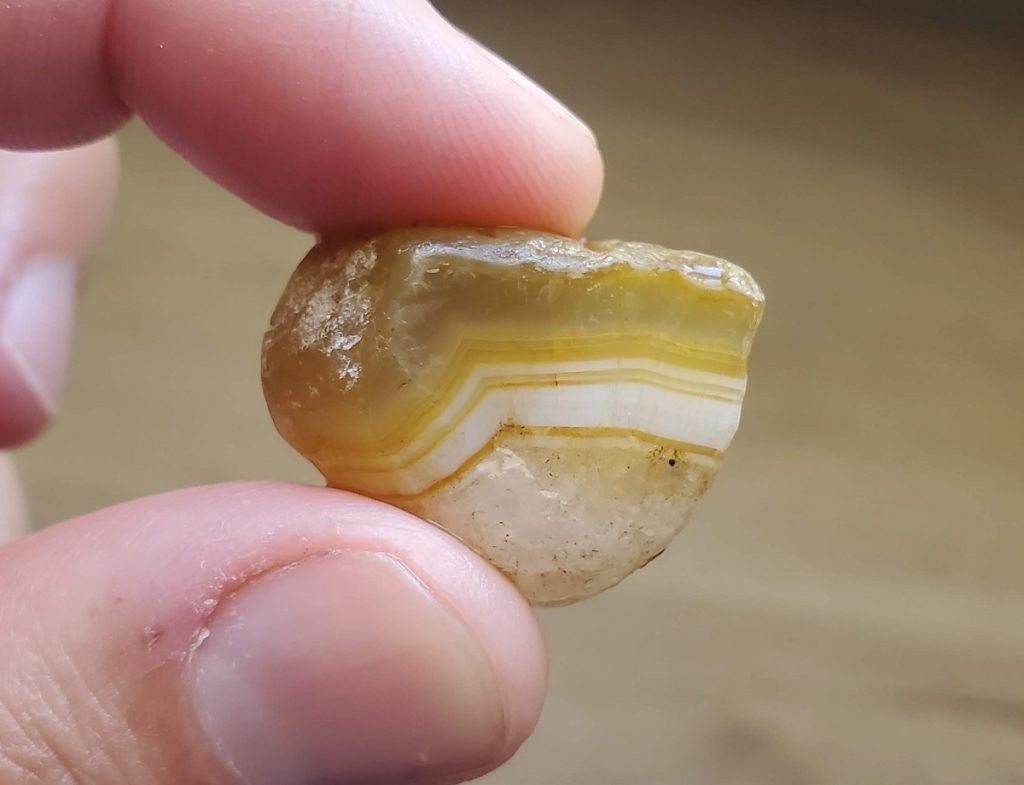
Agate is one of the underappreciated stones in my eyes. Unlike classic gemstones, agate is never the same and lacks solid coloration. Instead, it’s formed of intricate bands, trapped “mosses” (actually crystals like hornblende), and a surprising range of colors. All of this comes in the form of small nodules that can be found across large swathes of the world.
What’s not to like?
You should look into what kind of agate varieties are in your local area. In the town I grew up in there was an orange, marcasite-included agate known as “Nipomo agate” after the locality. This was worth a surprising amount, at least to me. It wasn’t hard to double a day’s income by pocketing bits of it when I was digging ditches downtown for contractors.
While a bit more valuable than normal, Nipomo Agate doesn’t even crack the top ten US agates in price. There are more specific variations like Fairburn Agate which can be worth more than $50 for a tiny, unpolished nodule. Most agate will go up in value when being slabbed, but you should double-check the prices on your chosen platform before committing to more than cutting a nodule in half and polishing the faces.
Agate is the very definition of a backyard find in many places. Keep an eye out and look for the tell-tale signs of rounded, slightly irregular nodules with waxy-feeling portions. Once you’ve got an eye for them you’ll find them everywhere, and it’s one of the most engaging rocks to hunt in my opinion.
- Ultimate Guide To Collecting Agates (What They Are and How To Find Them)
- 9 Different Types of Agate (With Pictures)
4. Obsidian
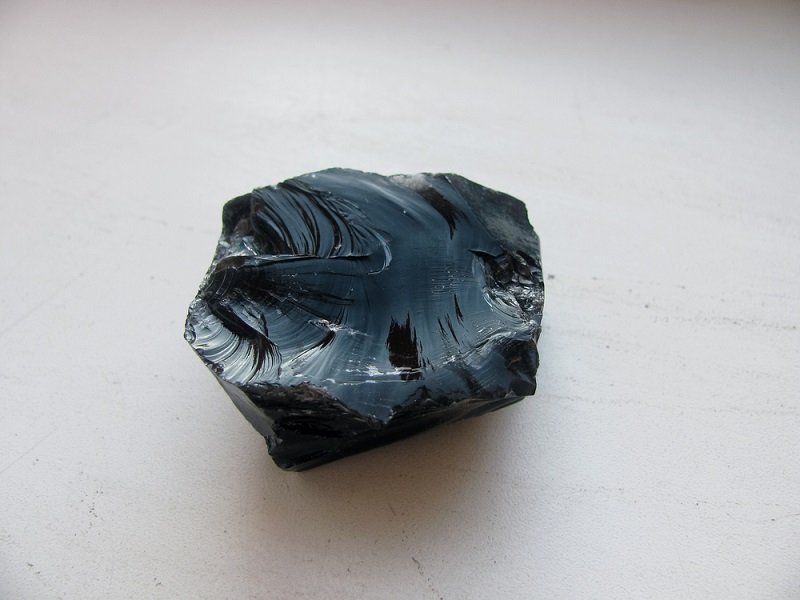
Obsidian is a volcanic glass, spread across a few places in the US. This glass was valuable in previous times because it can be formed into sharp edges with a little bit of pressure. The art of flintknapping was perfected with obsidian in the South Americas, and the material was in high demand in the trade routes that crossed the continent pre-European contact.
Obsidian isn’t quite as valuable as many of the gemstones on this list. A small piece of it isn’t worth much, and most of the time you’ll only be able to get $10-20 for a fist-sized nodule of the material. There are, however, two ways that obsidian can be turned into money without too much work.
The first is to find the rarer specimens. Things like rainbow obsidian go for a much higher price than plain black obsidian. The other is to slice the material into slabs, and possibly arrowhead preforms, with a slab saw. These don’t need to be polished like display specimens (and polishing the material is a serious pain), instead, you’ll find that flintknappers and lapidary artists will take it off your hands to work it further.
Obsidian isn’t found everywhere. Most of it is found along the Western Coast and the Pacific Northwest. The states of Oregon, California, and Nevada have the most, but you should take a look here to see if there are any local deposits.
5. Jasper
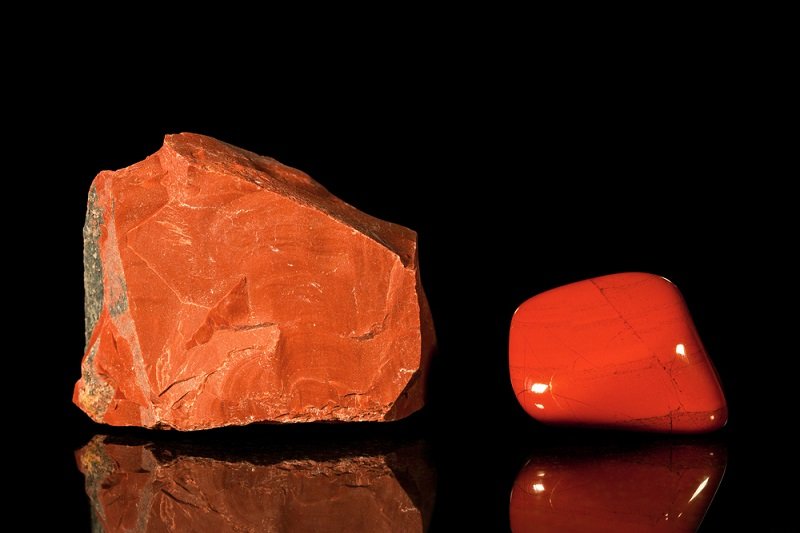
Agate is a cryptocrystalline chalcedony with inclusions that remains transparent. Jasper is the stuff that remains opaque even in thicker slices, although they’ll often have lighter sections of plain chalcedony. Jasper is traditionally a red material but it’s come to refer to a much wider range of opaque cryptocrystalline silica.
Jasper’s worth depends on the colors, patterns, and, sometimes, on the locality. In particular, nodules from old stock are desirable which is good news if you happen to have access to land near, but not on, older mines.
I don’t see much future in selling backyard jaspers without a slab saw (or a cheaper wet tile saw with a good blade). Nodules of unknown stock just aren’t worth much in most cases. What you can do to prosper from random jaspers is slice them open to get a better look at what you’re working with. You’ll be surprised at how some of the plain ones turn out.
From there it’s just a matter of cutting the slabs in the best direction for the pattern. Lapidaries will often buy any pretty jasper they find, especially from unknown sources. If you happen to find a place with a certain “style” of jasper it’s just a matter of clever marketing to get it in demand, but in my experience, spectacular nodes are often singular in an area.
It’s not worth diamond prices, but jaspers can be a profitable venture. Exceptional, singular nodules can bring in quite a bit of money, especially if you happen to find a jasp-agate with alternating sections of clear and opaque chalcedony. Jasper can be found in almost every state in varying amounts, try riverways and gravel pits to see what you can find.
6. Tourmaline
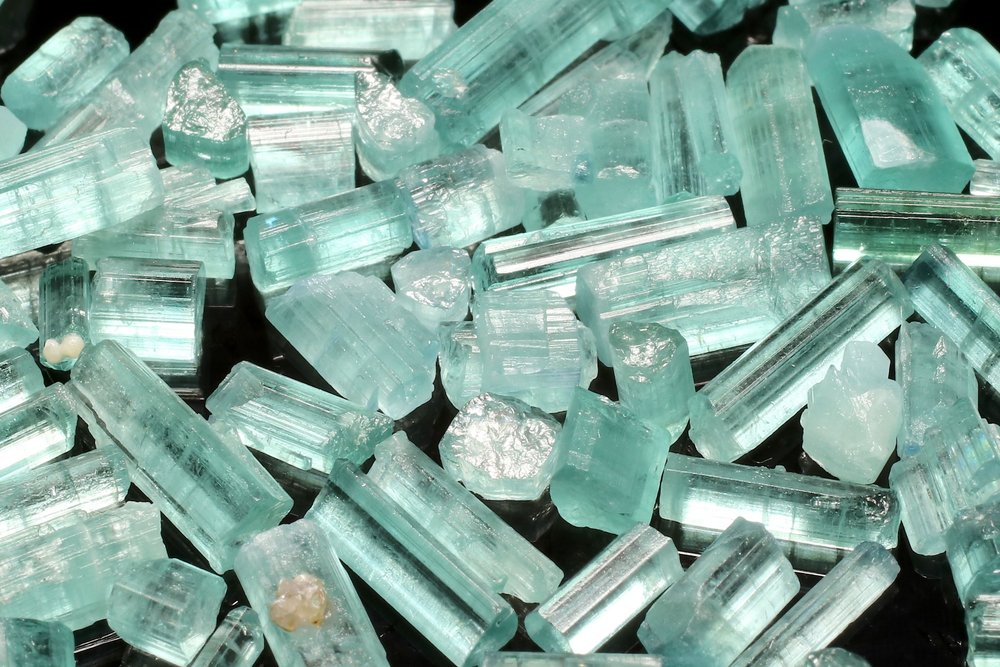
If you live in the San Diego area, you’re in luck. Everywhere else, you may be looking at a bit more of a gamble when you’re seeking out tourmaline. Tourmaline is most often found in pegmatites, which are extremely large-grained igneous stones that often have large crystals hidden inside.
The vast majority of tourmaline is the black type called schorl. Schorl itself is actually worth a few bucks each for smaller crystals separated from the matrix. Larger clusters will bring bigger prices, with the ultimate prize being large, well-formed crystals that retain a portion of the matrix. Schorl is usually sold as mineral samples, rather than as gem material. Colored tourmaline, even almost opaque specimens, will always be worth more.
Colored tourmaline doesn’t appear everywhere that tourmaline is found. Indeed, schorl makes up over 99% of the tourmaline found and it’s common even in places known for high-grade gem material like the mines outside San Diego. You can either separate the crystals from the matrix by careful incision with a small chisel or you can chip away as much rock as possible while leaving a base made of the bedrock. The latter samples are generally worth more, especially if they can be traced to a specific location.
Gem-grade material is awesome, but most of it will be found far from town in mines and quarries. Schorl can still make you a decent profit, especially if you can find large crystals to prepare as samples. Beryl is also a common find in these locations and is worth a few dollars too when prepared.
Gem-grade tourmaline is found primarily in Maine, Southern California, and Connecticut but it’s present in quite a few states. If a bit of digging turns it up in your area, it shouldn’t be too hard to turn a profit just by chipping away some matrix.
7. Opal (Common)
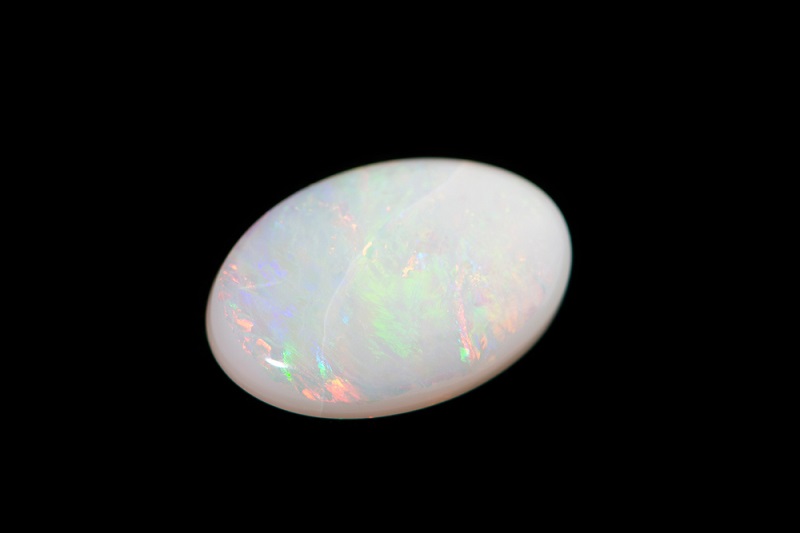
Opal is a frequent occurrence on these lists but the chances of finding it in your backyard are… basically nil. Precious opal is a material that’s been sought out since humans arrived in America. Where there is any significant quality of it you’ll find a mine. There may be some deposits far back in the mountains or in less explored regions of Alaska, but you’re not going to find a fist-sized nodule under your back porch or even at the local hot spot for rock collectors.
Here’s the thing: most people only think of white when they think of common opal. The truth is far different, with common opal being found with patterns that rival the best jaspers. Opals are also easier to work and cut than chalcedony-based stones due to their lower hardness. That makes it a good candidate for someone who doesn’t have any sawing experience just yet.
And even the white stuff can be great! Dendritic opal is highly sought after and worth a pretty chunk of change if cut. The key is to find nodules, slice them open, and find the right way to cut it just like you would with a jasper. If there happen to be any precious opal spots inside you got lucky, but don’t expect it.
Common opal isn’t sought after much, and some of it gets sold as jasper as well. Beautiful nodules come out of places like Nevada and the Mojave. You may also stumble upon botryoidal common opal, made of a mass of small spheres, which can be cleaned and sold as a mineral specimen. You’ll really only have trouble moving the material if it’s the pure white or off-white variety.
Not all opal is precious, but the majority of it can be sold for a profit. It’s found in most states that have a history of volcanic activity but the desert around Reno and Las Vegas Nevada are strewn with great pieces for those who are willing to look.
- Ultimate Guide To Collecting Opal (What It Is and How To Find It!)
- How To Tell If an Opal Is Real (Expert Tips)
- Online rock and mineral club for collectors of all levels!
- Find community with like-minded rock and mineral enthusiasts.
- Monthly Giveaways!
- Free Access to Entire Digital Library of Products (annual memberships)